

Here’s a thought that might change the way you approach everything.
The English you are acquiring right now, the words that are slowly becoming automatic, the phrases that are starting to feel natural, the grammar that is quietly organising itself in your mind: almost none of that is happening consciously. You are not in control of it. You cannot force it. You cannot schedule it.
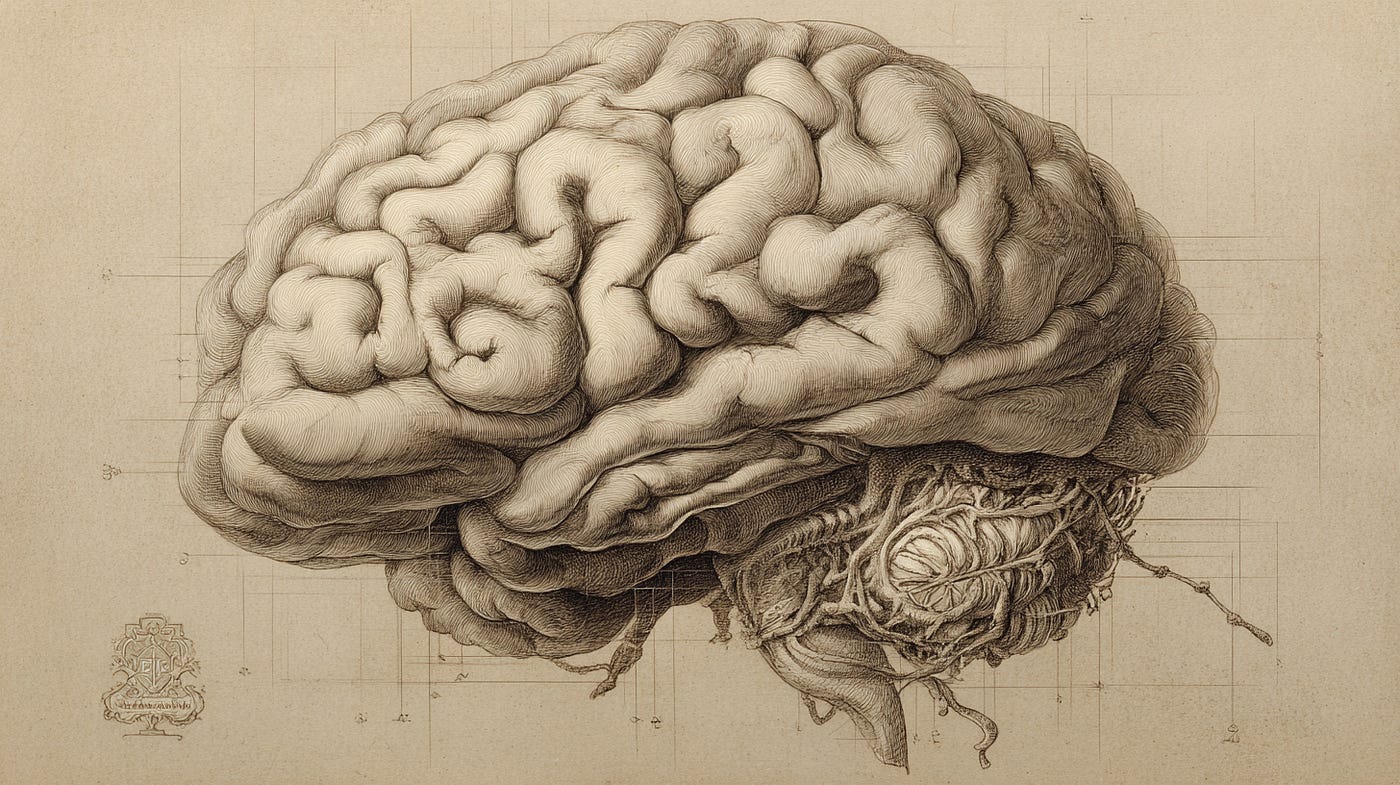
Your brain is doing it for you, in the background, without asking for your permission.
This is not a motivational metaphor. This is what the science of language acquisition actually tells us. And once you truly understand it, a lot of things about language learning start to make a lot more sense.
The Conscious Mind is a Slow Learner
We tend to trust our conscious minds. We make plans, set goals, study deliberately, and measure progress. This is how we approach most skills, and for many things it works well.
But language is different.
Conscious learning is slow, effortful, and fragile. When you consciously memorise a grammar rule, you store it in your explicit memory, the part of your brain that handles facts and procedures you can deliberately recall. You can retrieve that rule when you sit a test. You might even be able to explain it to someone else.
But the moment you’re in a real conversation, speaking at natural speed, managing meaning and tone and relationship all at once, your conscious mind simply cannot keep up. It doesn’t have the processing speed. You can’t simultaneously think about what to say, how to say it, which tense to use, where to put the adverb, and whether you need a definite or indefinite article. Something has to give.
What fluent speakers rely on is not conscious knowledge of rules. It is something much deeper and much faster: implicit knowledge. Language that has been so thoroughly absorbed that it operates below the level of conscious thought.
Explicit vs Implicit Knowledge: The Crucial Distinction
This distinction, between explicit and implicit language knowledge, is one of the most important ideas in linguistics, and it sits at the heart of understanding why input-based learning works so well.
Rod Ellis, one of the world’s leading researchers in second language acquisition, has spent decades exploring this divide. His work makes clear that explicit knowledge, the rules you can consciously state and explain, and implicit knowledge, the language you can use automatically without thinking, are stored differently in the brain, accessed differently, and developed differently.
Explicit knowledge is useful for editing, for careful writing, for checking your work. But it is not what you draw on when you speak. When you speak, you draw on implicit knowledge. And implicit knowledge, Ellis argues, is built primarily through exposure to meaningful input over time, not through the conscious study of rules.
This is a profound point. It means that all those hours spent memorising grammar tables are building the wrong kind of knowledge for the thing most learners actually want: to speak naturally and automatically.
Krashen’s Acquisition-Learning Hypothesis
Stephen Krashen drew this distinction sharply in what he called the Acquisition-Learning Hypothesis, one of his five foundational hypotheses about language. He argued that there are two entirely separate systems at work when we engage with a second language.
Learning is conscious. It is what happens in a classroom, when you study a rule, understand it, and can explain it. It produces explicit knowledge.
Acquisition is subconscious. It is what happens when you are exposed to comprehensible input over time and your brain silently absorbs the patterns of the language without you consciously registering that anything is being learned. It produces implicit knowledge.
Krashen’s controversial but compelling claim was that learned knowledge cannot become acquired knowledge. That is, you cannot study your way to fluency. The conscious and subconscious systems are separate, and only one of them produces the kind of automatic, natural language use that we recognise as true fluency.
Whether or not you accept every detail of this argument, the core insight has been supported by decades of research: the language that sticks, the language that becomes automatic and natural, is language that was acquired subconsciously through meaningful exposure, not language that was consciously memorised.
What is the Brain Actually Doing?
Let’s go a little deeper into what is actually happening in your brain when you absorb language subconsciously.
Patricia Kuhl, a neuroscientist at the University of Washington and one of the world’s leading researchers on how babies and adults acquire language, has shown through brain imaging studies that language is processed in remarkably complex ways that operate far below conscious awareness. When we hear a sentence in a language we know well, our brain processes its grammatical structure almost instantaneously, before we are even consciously aware of having heard it. We don’t analyse it. We just understand it.
This happens because the brain is a pattern recognition machine of extraordinary power. Given enough exposure to a language, it begins to extract the statistical regularities of that language: which sounds tend to follow which other sounds, which words tend to appear together, how sentences tend to be structured. It does this automatically, passively, continuously. And it gets better at it the more input it receives.
Kuhl describes the brain as a statistical learner, one that is constantly updating its model of the language based on every new piece of input it encounters. You don’t direct this process. You don’t consciously participate in it. You simply need to provide the raw material: lots and lots of meaningful language input.
The Role of Sleep
Here’s something that often surprises people: a significant part of language consolidation happens while you are asleep.
Matthew Walker, the neuroscientist and author of Why We Sleep, has written extensively about the role of sleep in memory consolidation. During sleep, and particularly during the deep stages of non-REM sleep, the brain replays and consolidates what it has encountered during the day. It transfers information from short-term to long-term memory, strengthens neural connections, and integrates new learning with existing knowledge.
This applies directly to language. The words and phrases and patterns you encountered during your listening and reading session today are being processed and embedded tonight while you sleep. You are, quite literally, learning English in your sleep.
This has a practical implication: consistency matters more than intensity. A learner who does forty-five minutes of good input every day and sleeps well is likely making more lasting progress than someone who does a six-hour study marathon once a week. The brain needs regular cycles of input and consolidation. It needs time to do its work.
Dick Schmidt and the Noticing Hypothesis
Not everyone agrees that acquisition is entirely unconscious, and it’s worth engaging with a more nuanced view.
Dick Schmidt, a linguist who spent much of his career at the University of Hawaii, proposed what he called the Noticing Hypothesis. Schmidt argued that while much of language acquisition is indeed implicit and subconscious, there is a role for conscious attention in the process. Specifically, he argued that we need to consciously notice a feature of the language, really register it, in order for it to be acquired.
This doesn’t mean going back to grammar study. It means being present and attentive during your input. When a phrase catches your ear, when you encounter a construction you haven’t seen before, when something sounds particularly natural or elegant, paying attention to that moment, pausing on it, being curious about it, may help drive it deeper into your implicit knowledge over time.
Schmidt’s work suggests that the subconscious process of acquisition benefits from a light touch of conscious attention. Not the heavy, effortful, rule-memorising kind. Just the simple act of noticing.
This is actually one of the things that makes tools like LingQ so valuable. When you’re reading and listening simultaneously and you encounter an unfamiliar word, you look it up in context, which is exactly the kind of noticing Schmidt describes. You’re not drilling it. You’re not making flashcards. You’re just registering it in a meaningful moment, and then moving on. The subconscious takes it from there. Sign up at lingq.com
Why This Means You Need to Stop Trying So Hard
Here is perhaps the most counterintuitive takeaway from all of this research.
For many learners, the biggest obstacle to acquiring English is not a lack of effort. It is too much of the wrong kind of effort.
When you are straining to understand, anxiously monitoring your output, consciously checking your grammar, or beating yourself up for mistakes, you are not in an optimal state for subconscious acquisition. Your conscious mind is too loud. It is drowning out the quieter, deeper process that actually produces fluency.
James Asher, who developed Total Physical Response in the 1970s, observed that the most natural language acquisition environments are characterised by low anxiety, high comprehensibility, and a sense of play. Children acquiring their first language are not trying hard. They are just living, listening, and gradually making sense of the world through language.
You cannot perfectly replicate that as an adult. But you can get closer to it than most classroom-based learning allows. You can choose content you genuinely enjoy. You can listen and read without pressure to understand everything. You can let the language wash over you with curiosity rather than anxiety. You can trust the process even when you can’t feel it working.
And underneath all of that, your brain will be doing what it was built to do.
The Iceberg of Language Learning
Think of your English as an iceberg.
The small part above the water is your conscious knowledge: the grammar rules you can explain, the vocabulary words you can deliberately recall, the phrases you have consciously memorised. This is what most traditional language teaching focuses on, because it is visible, measurable, and easy to test.
But the vast mass beneath the surface, the part that makes up most of the iceberg, is your implicit knowledge: the patterns, rhythms, instincts, and automaticities that have been quietly built up through thousands of hours of exposure. This is what fluency actually runs on. And it was built almost entirely by your subconscious mind, without you knowing it was happening.
Every hour you spend reading and listening in English is adding to that underwater mass. It doesn’t always feel like progress. Some days it feels like nothing is happening at all. But it is happening. Quietly, steadily, below the surface, your brain is building something extraordinary.
Trust the Process. Your Brain Knows What It’s Doing.
The most important thing you can take from all of this is simple.
Trust the process.
Not because it is easy or fast or guaranteed, but because this is genuinely how language acquisition works. The brain learns language subconsciously, through meaningful exposure, over time. Your job is not to force that process. Your job is to feed it.
Read. Listen. Engage with English that interests you. Come back to content you love. Stay curious, stay relaxed, and stay consistent. And then let your extraordinary, pattern-finding, language-absorbing brain do what it was designed to do.
You will wake up one day and realise the English is just there. Not because you memorised it. Because you acquired it.
Ready to Activate What Your Brain Has Been Building?
Speaking is where all that subconscious acquisition comes to the surface. It’s where you discover just how much your brain has quietly stored away.
If you’re ready to start having real English conversations in a relaxed, natural environment where your subconscious can do its best work, I’d love to meet you on iTalki.
And for the best input platform to keep feeding that subconscious acquisition engine every day: lingq.com
Your brain is ready. Let’s get to work.
🙏🏼 Richard