

He grew up in Russia. Learned English at school the way most people do there. Grammar tables, rules, exercises, the kind of structured approach that gives you a solid foundation and not much else. It got him so far. Enough to read, enough to follow things, enough to feel like the language was within reach.
Then, somewhere along the way, he just started enjoying English. Films. Music. TV series. Not as study material. Just the things he wanted to watch and listen to. He was not sure how much it had helped, he told me. He just knew he had enjoyed it.
I could tell immediately that it had helped enormously.
His English was natural. Not perfect, but natural. The rhythm was right. The phrases landed the way a native speaker would land them. There was a flow to it that you cannot get from a grammar book, that only comes from hundreds of hours spent inside the language, absorbing how it actually moves.
Then he told me what happened next.
He decided he wanted to take his English further. So he went back to studying. Grammar, this time deliberately and seriously. And for the first time in his life, he said, his English got worse.
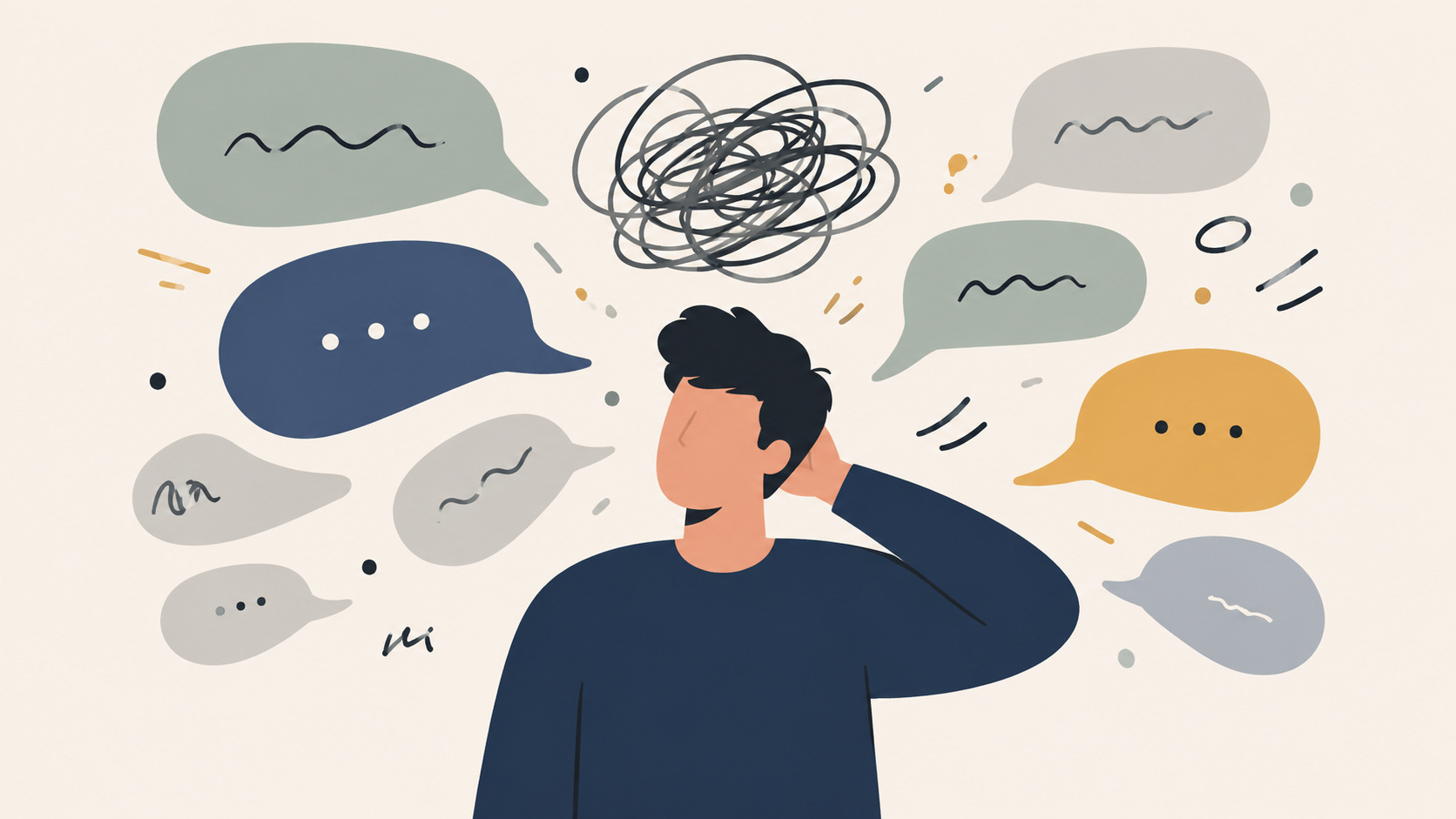
He knew what he wanted to say. The words were there. But the moment he opened his mouth, something else switched on too. A voice that watched every sentence before it came out. That questioned the tense, checked the structure, reviewed the word choice. He was constructing sentences rather than speaking them. And the result was slower, more stilted, more effortful than anything he had produced when he was simply watching films and not thinking about English at all.
He looked at me slightly baffled, as if he was describing something that should not be possible.
I told him it made complete sense.
The critic in the room
There is a version of learning that adds knowledge. And there is a version that adds a critic.
His years of watching and listening had built something remarkable without him fully realising it. An instinct. A feel for the language. The kind of deep familiarity that lets you open your mouth and have something reasonably natural come out, because somewhere underneath the surface your brain has absorbed thousands of patterns and knows, without being told, roughly how English should sound.
When he went back to studying grammar, he did not lose that instinct. But he added something on top of it. A monitoring system. A part of his attention that now sat in the room during every conversation and watched. Evaluated. Intervened.
And that monitoring system, however well intentioned, was costing him fluency.
This is not a new idea. Researchers who study language acquisition have observed for decades that conscious attention to form, focusing on the rules while you are trying to use the language, interferes with the natural flow of production. The knowledge is there. But the act of reaching for it mid-sentence interrupts the process that would have produced something natural if left alone.
Think about walking. You know how to walk. You have done it thousands of times. Now try walking while consciously thinking about every movement. Which muscle fires first. How your weight shifts. Where exactly your foot lands. You will walk worse. Not because you have forgotten how, but because the conscious mind has interrupted something that works better without its involvement.
Speaking a language you know well is the same. The moment you start watching yourself do it, you are in trouble.
What grammar study is actually for
None of this means grammar study is useless. It is not. His school years gave him a foundation that the films and music and TV series built on top of. Without some structural understanding of how English works, the input has less to attach to. The two things work together.
But there is a time and a place for each of them, and they are not the same time and the same place.
Grammar is for understanding. For reading about a structure when you encounter it and want to know what it is doing. For noticing, after a conversation, why a particular sentence felt wrong. For the quiet moments when you are not in the middle of using the language and can think about it clearly.
It is not for the moment of speaking. The moment of speaking belongs to instinct. To the patterns your brain has absorbed through all that reading and listening and watching. To the voice that knows roughly how English sounds and can produce something close to it without stopping to check the rules first.
The goal of all that grammar study, eventually, is to make itself unnecessary. To be absorbed so deeply that it stops being a set of rules you consult and becomes part of the instinct itself. That takes time. It takes a lot of input. And it cannot be rushed by monitoring yourself more closely.
What he needed to hear
I told him to stop studying grammar for a while. Not forever. Just for now.
Go back to the films. Go back to the music. Go back to the thing that built the instinct in the first place, and trust that the instinct is still there underneath the noise the monitoring system is making. The goal is not to think less. It is to let the thinking happen in the background, where it belongs, rather than in the foreground where it interrupts everything.
The English that felt worse was not actually worse. It was the same English it had always been, just with something sitting on top of it that did not need to be there.
Remove the critic. The fluency comes back.
If any of this sounds familiar, it might be worth having a conversation about where you are in your learning and what is actually getting in the way. That is exactly the kind of thing I explore with students in sessions on iTalki. You can book directly with me here if you would like to talk it through.
Try This
Next time you are speaking English, try giving yourself one simple rule: no editing while speaking. Whatever comes out, let it come out. You can reflect on it afterwards. You can notice what felt uncertain. But in the moment, just speak.
It will feel uncomfortable at first. Things will come out imperfectly. That is fine. Imperfect and flowing is more useful than perfect and frozen.
The instinct your listening and reading have built is more capable than the critic gives it credit for. Give it some room.
Have you ever felt your English get worse the more you thought about it? What helped you get out of your own way?
If this post helped, a like lets me know and a restack helps it reach another learner who might need it.
Thanks for reading. I’m Richard, based in Auckland, New Zealand, an English fluency coach who believes fluency is something you absorb, not something you’re taught.
Some links in this blog are affiliate links. I earn a small commission if you sign up, at no extra cost to you. I recommend these products because I believe in them.