

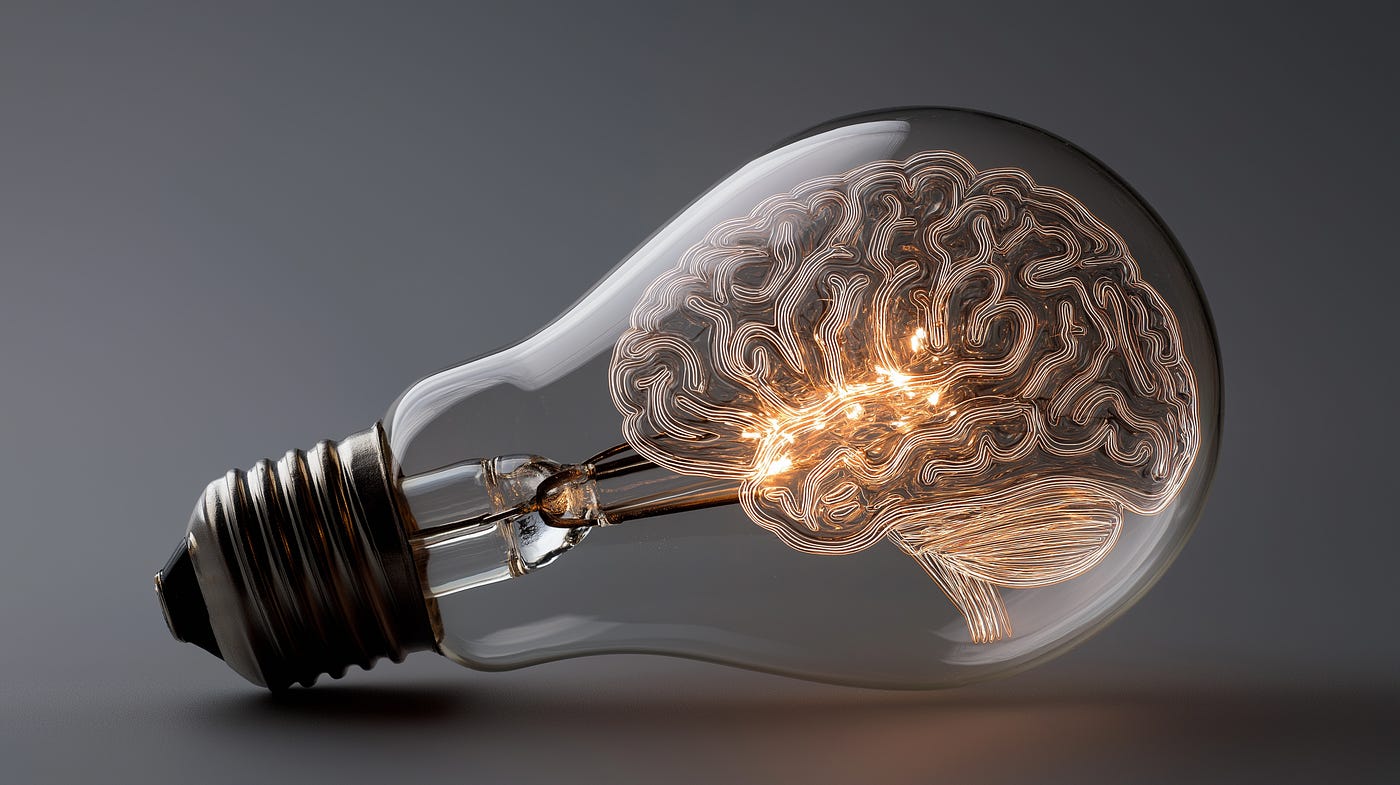
I hear this all the time. From students. From friends. From people at parties who find out I’m into language learning.
“Oh, I could never do that. I’m just not a language person.”
“I tried to learn French at school and I was terrible.”
“Some people have a gift for languages. I definitely don’t.”
“My brain just doesn’t work that way.”
It’s said with such conviction. Such finality. As though “not being good at languages” is a fixed biological trait, like eye colour or height. Something written into the DNA. Something you either have or you don’t.
And I understand why people believe it. I really do. If you spent five years studying French in school and came out barely able to order a croissant, the most obvious conclusion is that the problem is you. Your brain. Your aptitude. Your inherent lack of whatever it is that language people have.
But that conclusion, however obvious it feels, is wrong. Spectacularly, provably, scientifically wrong.
And I can prove it with one question.
Do You Speak a Language?
You do, don’t you? You speak at least one language. Your native language. Fluently. Automatically. Without effort. You’ve been doing it since you were roughly two years old and you’ve never stopped.
You can express complex ideas. You can tell jokes. You can argue. You can whisper, shout, persuade, comfort, and lie. You can construct sentences you’ve never said before and understand sentences you’ve never heard before. You do this thousands of times a day without breaking a sweat.
That is not a small accomplishment. That is one of the most complex cognitive achievements in the known universe. Humans are the only animals known to be capable of complex language. The ability to learn language is innate to the human brain: infants demonstrate the ability to detect complex patterns in speech and automatically generate implicit rules to reliably detect and produce these patterns in the future.
Your brain did this. The same brain that you’re now telling me can’t learn English. That brain, the one inside your head right now, successfully acquired one of the most complex systems in existence, a complete human language, from scratch, without instruction, before you could tie your own shoes.
The hardware works. It has already proven that it works. The question is not whether your brain can learn a language. It’s already done it. The question is whether you’re using it correctly for the second one.
The Computer Analogy
Think of your brain as a computer. An extraordinarily powerful one. A biological supercomputer that was literally designed, by millions of years of evolution, for one primary task: making sense of the world around it. Finding patterns in chaos. Turning noise into signal. Decoding the unknown.
Language is arguably the task this computer was most specifically built for. The human brain demonstrates the ability to detect complex patterns in speech and automatically generate implicit rules to reliably detect and produce these patterns. That is its core function. That is what it does better than any machine ever constructed.
Now imagine you have this incredible computer. And you try to run it by typing commands in the wrong programming language. Nothing works. The computer doesn’t respond. The outputs are garbage. The machine seems broken.
You wouldn’t conclude that the computer is defective. You’d conclude that you’re communicating with it wrong. That you need to speak its language. That if you input the right commands in the right format, the machine will do exactly what it was designed to do.
This is exactly what happens with traditional language learning methods.
Grammar study, vocabulary lists, textbook exercises, classroom drills: these are the wrong programming language for the brain’s language acquisition system. They input information in a format that the system wasn’t designed to process. The brain receives grammar rules and tries to do something useful with them, but rules are not what its language system runs on. It runs on patterns extracted from meaningful input. That’s its programming language.
When you feed the brain grammar rules and expect it to produce fluent English, it’s like typing Python commands into a machine that only reads JavaScript. The input doesn’t match the system. The output is predictably poor. And the user, not understanding the mismatch, concludes that the machine is broken.
The machine is not broken. You’re just talking to it wrong.
What the Brain Actually Needs
Your brain’s language acquisition system has very specific input requirements. They’ve been studied extensively by linguists, neuroscientists, and cognitive psychologists, and they are remarkably consistent across every human being on earth.
It needs meaningful input. Real language, used to communicate real meaning, in contexts that are comprehensible and interesting. Not isolated grammar rules. Not decontextualised vocabulary. Real English, doing what English does: carrying meaning between people.
It needs volume. Thousands of hours of input. Not tens. Not hundreds. Thousands. This is how much input was required for your first language, and while a second language typically requires less, it still requires far more than most learners provide.
It needs time. The pattern extraction process is not instant. It works over weeks, months, and years. The brain needs repeated exposure to the same patterns across many different contexts before those patterns become automatic.
It needs low pressure. Anxiety and stress interfere with the acquisition system. A relaxed, engaged, curious state of mind is optimal for pattern extraction. A stressed, test-focused, mistake-fearing state is not.
And it needs enjoyment. Because enjoyment is what sustains the volume and the time. Without enjoyment, the input stops flowing, and without input, the system has nothing to work on.
Give the brain these things, meaningful input, sufficient volume, adequate time, low pressure, and genuine enjoyment, and it will acquire English. Not because you’re talented. Not because you have a gift. Because the system was designed for exactly this task, and when it receives the right input, it does its job.
Every single time. In every single human being. Without exception.
“But Some People ARE Better at Languages”
Okay, let’s address this honestly, because it’s a fair point and pretending that individual differences don’t exist would be dishonest.
Research by Turker, Seither-Preisler, and Reiterer published in Neurobiology of Language suggests that language aptitude may arise from an advantageous neurocognitive profile, including differences in the auditory cortex and neural connectivity, which can lead to high intrinsic motivation and proactive engagement in language learning activities.
So yes. Some people do have brains that are slightly better optimised for language learning. They might have a keener ear for phonological distinctions. They might have stronger working memory. They might have neural pathways that process language input slightly more efficiently.
But notice the word “slightly.” We’re talking about differences at the margins. The difference between someone who might reach fluency in 800 hours of input and someone who might need 1,200 hours. The difference between someone who picks up pronunciation a bit faster and someone who takes a bit longer. Not the difference between someone who can learn a language and someone who can’t.
And crucially, recent research has shown that intensive language learning experiences can actually enhance specific components of language aptitude and related cognitive abilities, including working memory. Specific aspects of language aptitude may be more dynamic than previously thought.
Read that again. Language aptitude is not fixed. It is dynamic. It changes. It improves with use. The very act of learning a language makes your brain better at learning languages. The machine upgrades itself through the process of being used.
The person who says “I’m not good at languages” is often the person who tried once, using the wrong method, had a bad experience, and concluded that the problem was their brain rather than the method. It would be like trying to drive a car with the handbrake on and concluding that you’re bad at driving.
You’re not bad at driving. Release the handbrake.
The Real Reasons People “Fail” at Languages
If it’s not aptitude, what is it? Why do so many people try to learn English and give up? Why does the failure rate feel so high?
It’s almost never the brain. It’s almost always one of these.
The wrong method. Grammar-based instruction, vocabulary memorisation, textbook exercises. These methods don’t match how the brain’s language system works. They produce frustration and a false sense of inability. The learner concludes they can’t learn languages. In reality, the method was wrong. As we’ve discussed extensively on this blog, the brain acquires language through meaningful input, not through rule study.
Not enough time. Many people try language learning for a few weeks or months and expect significant results. Language acquisition takes hundreds, often thousands, of hours. A few months of casual effort is like jogging around the block and wondering why you can’t run a marathon. The ability is there. The time investment hasn’t been made yet.
Boring content. A learner who is grinding through textbook dialogues about going to the post office is not having a brain failure. They are having a motivation failure. Their brain is perfectly capable of acquiring English. But it is refusing to engage deeply with content it finds utterly uninteresting, because that’s what brains do. They allocate resources toward things that matter and away from things that don’t.
Anxiety and pressure. A learner who is terrified of making mistakes in a classroom, who freezes up during speaking tests, who associates English with embarrassment and failure, is not experiencing a language aptitude problem. They are experiencing an affective filter problem. Their brain’s acquisition system is blocked by anxiety.
Giving up too early. Language learning has a long invisible phase where progress is happening below the surface but can’t be felt. Many learners quit during this phase, convinced nothing is happening. Everything was happening. They just didn’t stay long enough to see it emerge.
Every single one of these problems is solvable. Not one of them is a permanent feature of your brain. They are method problems, time problems, content problems, emotional problems, and patience problems. All fixable. All within your control.
Your Brain is Literally Wired for This
I want to come back to the neuroscience one more time, because it bears repeating.
Your brain did not develop the ability to learn language as a nice side feature. Language acquisition is one of the primary functions of the human brain. It is arguably the thing that most distinguishes human cognition from every other species on the planet.
The neural architecture for language, Broca’s area, Wernicke’s area, the arcuate fasciculus, the auditory cortex, the dense network of connections that support language processing, all of this exists in your brain right now. It was built by evolution over millions of years specifically for the task of acquiring and using language.
Research has shown that language learning in both younger and older adults affects brain plasticity, influencing functional connectivity, grey matter volume, and cortical thickness. Studies have even found increases in hippocampus volume after second language training.
Your brain doesn’t just tolerate language learning. It physically grows in response to it. The neural pathways strengthen. The grey matter thickens. The connections multiply. Your brain literally gets bigger and more powerful the more language you feed it.
This is not the behaviour of a system that “just isn’t good at languages.” This is the behaviour of a system that was built for exactly this purpose and that thrives when given the opportunity to do its job.
The Interest Problem (And the Solution)
Now here’s where I want to be honest about something that might apply to you.
Some people who say “I’m not good at languages” actually mean “I’m not interested in learning languages.” And that’s a completely different thing.
If you have zero interest in English, if it doesn’t connect to anything you care about, if there’s no reason in your life to learn it, then yes, the process will be difficult. Not because your brain can’t do it. Because your brain won’t prioritise it. As we’ve discussed throughout this blog, the brain allocates its resources toward things that matter to you. If English doesn’t matter, the resources don’t flow.
But this is where the input method becomes so important. Because the input method doesn’t ask you to be interested in English. It asks you to be interested in something, anything, and then to engage with that thing in English.
You don’t care about English grammar? Nobody’s asking you to. You care about football? Read about football in English. Listen to football podcasts in English. Watch football analysis on YouTube in English.
You don’t care about vocabulary lists? Nobody’s asking you to care. You care about cooking? Read recipes in English. Watch cooking shows in English on Lingopie. Listen to food podcasts in English.
The English isn’t the thing you need to be interested in. The content is. And when the content is genuinely compelling, the English acquisition happens as a side effect of engaging with something you actually care about.
This is the solution to the interest problem. Don’t make English the subject. Make it the medium. The vehicle. The language in which the interesting stuff happens to arrive.
What “Good at Languages” Actually Means
Let me redefine this phrase, because I think the common understanding is wrong.
Being “good at languages” does not mean having a special brain. It does not mean possessing an innate gift that others lack. It does not mean finding language learning effortless or easy.
Being good at languages means three things:
Using the right method. Understanding that the brain acquires language through meaningful input, and providing that input consistently over time. Not fighting the system with grammar drills and vocabulary lists.
Being patient. Understanding that language acquisition takes a long time and being willing to stay the course through the invisible phases when nothing seems to be happening.
Enjoying the process. Finding content that is genuinely compelling and making that content the centre of your practice, so that the daily habit sustains itself through enjoyment rather than discipline.
None of these is a talent. They are all choices. Choices that anyone can make, regardless of their aptitude, their age, their educational background, or their previous experience with language learning.
You can choose the right method. You can choose to be patient. You can choose to find content you love. And if you make those three choices consistently, your brain, which was literally built for this job, will do the rest.
The Proof is in Every Polyglot’s Story
If language learning were truly a matter of innate talent, you would expect the world’s most successful polyglots to have been gifted from birth. Language prodigies. Natural-born linguists with extraordinary brains.
In fact, the opposite is almost always the case. As we discussed in our post about Matt vs Japan, Khatzumoto, and the Refold community, the most successful language learners are typically ordinary people who discovered the right method and then applied it with extraordinary consistency.
Steve Kaufmann, who speaks over twenty languages, has said repeatedly that he has no special talent for languages. He credits his results entirely to massive input through reading and listening to content he finds interesting. The same method. The same process. Applied over decades.
The secret isn’t talent. The secret is input, time, and enjoyment. And those are available to everyone.
You Are Already Good at Languages
Here is where I want to land, because it’s the most important point in this entire post.
You are already good at languages. You have already proven it. You acquired a complete human language, one of the most complex systems in existence, through the sheer power of your brain’s pattern recognition system, without instruction, without study, without anyone explaining the rules.
That brain hasn’t gone anywhere. It’s still there. Still capable. Still wired for exactly this task. Still running the same extraordinary pattern-extraction software that decoded your native language from scratch.
The only thing standing between you and English fluency is not talent. It’s not aptitude. It’s not some mysterious quality that other people have and you don’t.
It’s input. Enough of the right kind of input, delivered in the right way, over enough time.
Feed the computer in its language. Give it what it was designed to receive: meaningful, compelling, real English, consumed with genuine interest, consistently, patiently, enjoyably, over months and years.
And watch what it builds.
Because it will build English. The same way it built your native language. The same way it would build any language on earth, given enough input and enough time.
Your brain is not broken. Your brain is a language-learning machine. The most sophisticated one in the known universe.
It’s time to start using it properly.
For feeding your brain the English it was designed to acquire, with content you love and progress you can track, LingQ is the tool I recommend above all others: lingq.com
For learning English through TV shows and films with interactive subtitles, Lingopie turns your screen time into genuine acquisition.
If you want compelling, story-driven English listening at just the right level, Olly Richards’ Conversations course is well worth exploring.
If you’re looking for a conversation partner to practise your English with, iTalki is where I’d start. It’s full of great tutors across every language and every style. And if you’d like to work with me specifically, book a trial lesson here.
✍🏼 Richard
Some links on this blog are affiliate links. I earn a small commission if you sign up, at no cost to you. I recommend these products because I genuinely believe in them.